Finding a food joke that earns a real laugh can be harder than choosing dinner from a menu full of tempting dishes. Repeated punchlines and predictable puns quickly lose their flavour. This collection of Chinese food jokes brings together playful noodle puns, dumpling humour, fortune cookie surprises, and funny takeout moments for family dinners, friendly conversations, and social media captions.
🎮 Guess the Punchline
Funny Chinese Food Jokes to Start With
These short jokes are easy to remember and work well when you want to add a little humour to dinner.
- My noodles started a support group because their lives were getting too tangled.
- The dumpling opened a bakery because it wanted to make a little more dough.
- Fried rice never panics. It knows how to handle the heat.
- I asked my fortune cookie for financial advice. It told me to stop spending money on takeout.
- My chopsticks have one job, yet every meal turns into an Olympic event.
- The spring roll became a comedian because it knew how to roll with the punches.
- My dinner was so good that I considered writing a glowing review on the bottom of the takeout box.
- The soy sauce joined the conversation because it wanted to add a little flavour.
- The wonton kept its secrets well because it was always full of surprises.
- I ordered extra fried rice for tomorrow. Apparently, my future is looking delicious.

Chinese Food Puns About Noodles and Dumplings
Noodles, dumplings, and wontons offer plenty of opportunities for playful word choices. Their shapes, textures, and familiar place on the dinner table make them natural subjects for lighthearted jokes.
Funny noodle jokes
- My noodles are terrible at keeping secrets. Everything gets twisted eventually.
- The spaghetti tried to become a detective, but every clue led to another tangled case.
- I asked the noodles to straighten out their problems. They said life was more interesting with a few twists.
- The noodle joined a fitness club to improve its flexibility. It was already ahead of the competition.
- My noodles started a band. Their first hit was called Twist and Shout.
- The noodle chef became a motivational speaker because he knew how to pull people together.
Dumpling and wonton jokes
- Why did the dumpling get a promotion? It always knew how to wrap up a project.
- The dumpling auditioned for a movie and landed the role. It was perfect for the filling part.
- My dumplings formed a club, but membership was limited to those who could keep things together.
- The wonton became a mystery writer because it had plenty of secrets inside.
- What did the dumpling say before the big performance? “I am ready to bring something special to the table.”
- I tried counting my dumplings before dinner. The number became a mystery before I reached the sauce.
Funny Fried Rice and Soy Sauce Jokes
Fried rice and soy sauce bring their own flavour to food wordplay. These jokes work especially well for quick conversations, lunch breaks, and captions about your favourite meal.
- Fried rice entered a talent show because it was ready to stir up some excitement.
- Why did the rice win the cooking competition? It knew how to keep its cool under pressure.
- My fried rice has a better social life than I do. It always gets invited to dinner.
- The soy sauce became a life coach because it believed every situation needed a little seasoning.
- Why did the sauce become everyone’s favourite guest? It added flavour wherever it went.
- The rice started telling jokes, but its delivery was a little undercooked.
- I asked the chef for a balanced meal. He gave me fried rice and a very confident fortune cookie.
- My leftover rice wanted a second chance. The frying pan gave it a fresh start.
Fortune Cookie Jokes With Unexpected Predictions
Fortune cookies are a familiar feature of many Chinese American restaurant experiences. Their tiny messages provide an easy setup for jokes about predictions, advice, and life’s unexpected turns.
- My fortune cookie predicted a big surprise. The restaurant had forgotten my extra dumplings.
- I asked my fortune cookie when I would become rich. It suggested I stop ordering the most expensive meal.
- My cookie said happiness was just around the corner. The dessert menu was sitting right there.
- The fortune cookie started writing a diary because it was tired of keeping everyone else’s secrets.
- I opened my fortune cookie and found life advice. I was hoping for a discount code.
- My fortune cookie predicted a delicious future. At last, a forecast I could trust.
- Why did the fortune cookie become a comedian? It always had a little message with a twist.
- The cookie told me to follow my dreams. I followed the delivery driver to the door instead.
For readers curious about the story behind this familiar treat, the Smithsonian National Museum of American History’s account of fortune cookie origins explains its Japanese influences and its development in the United States. The history is more complicated than the common assumption that fortune cookies originated in China.
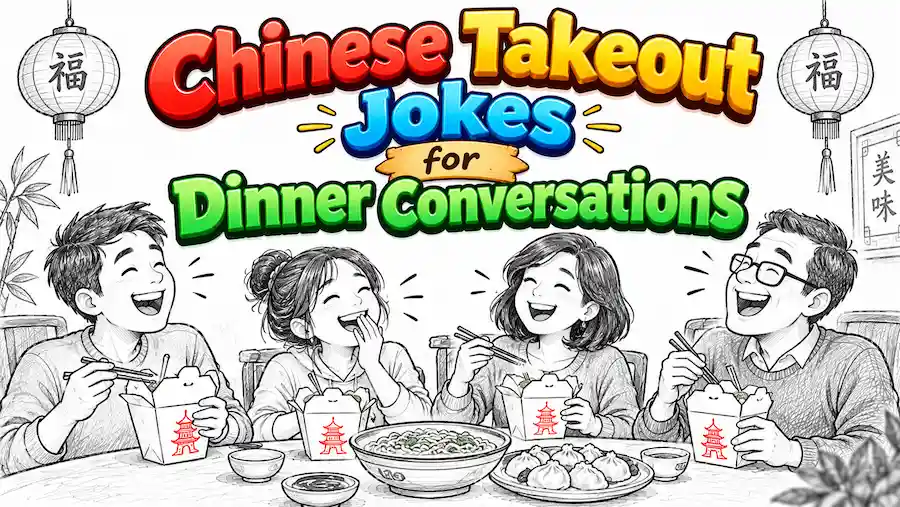
Chinese Takeout Jokes for Dinner Conversations
Takeout dinners create plenty of familiar situations: choosing what to order, waiting for delivery, sharing the last dumpling, and discovering that everyone wants the same dish.
- My family agreed to order one dish each. We then spent twenty minutes negotiating over everyone’s food.
- The delivery driver asked whether I was expecting company. I said yes, the leftovers were arriving tomorrow.
- Why did the takeout menu become a family favourite? It always had something everyone could agree on, eventually.
- I ordered enough food for tomorrow. Tomorrow called to say it had other plans.
- My friend said we should share the last dumpling. We are still negotiating the meaning of “share.”
- The takeout bag looked light, so I checked it twice. My appetite had already filed a missing food report.
- Dinner arrived right on time. My self control, unfortunately, was still stuck in traffic.
- I planned to save half my meal for lunch. The plan was excellent until I tasted the first bite.
Short dialogue jokes
Friend: Why did you order three servings of fried rice?
Me: One for dinner, one for tomorrow, and one for emergencies.
Friend: What kind of emergency requires fried rice?
Me: The kind where there is no fried rice.
Parent: Did you save any dumplings for everyone else?
Child: Absolutely.
Parent: Where are they?
Child: I saved everyone the trouble of having to eat them.
Waiter: Would you like anything else with your meal?
Customer: Yes, a little more time.
Waiter: For dessert?
Customer: No, to decide whether I have room for dessert.
Clean Chinese Food Jokes for Kids
Kids often enjoy jokes with simple language, familiar foods, and an unexpected ending. These examples are suitable for family meals, lunchbox notes, school activities, and casual joke telling.
- Why did the noodle bring a map? It kept getting lost in the sauce.
- What did the dumpling say to its friend? “You make me feel all wrapped up in happiness.”
- Why did the rice sit near the window? It wanted to see what was cooking outside.
- What is a fortune cookie’s favourite subject? Predicting the future.
- Why did the chopsticks go to school? They wanted to pick up some new skills.
- What did the spring roll say at the finish line? “I rolled right into first place!”
- Why did the fried rice bring a spoon to the party? It wanted to stir up some fun.
- What did the little dumpling say before bedtime? “I am stuffed. Good night!”
- Why did the noodle make friends with the soup? They both wanted to stick together.
- What is a rice bowl’s favourite kind of music? Anything with a good beat to stir to.
These jokes keep the focus on food and wordplay rather than cultural stereotypes. That makes them easier to share with children and people from different backgrounds.
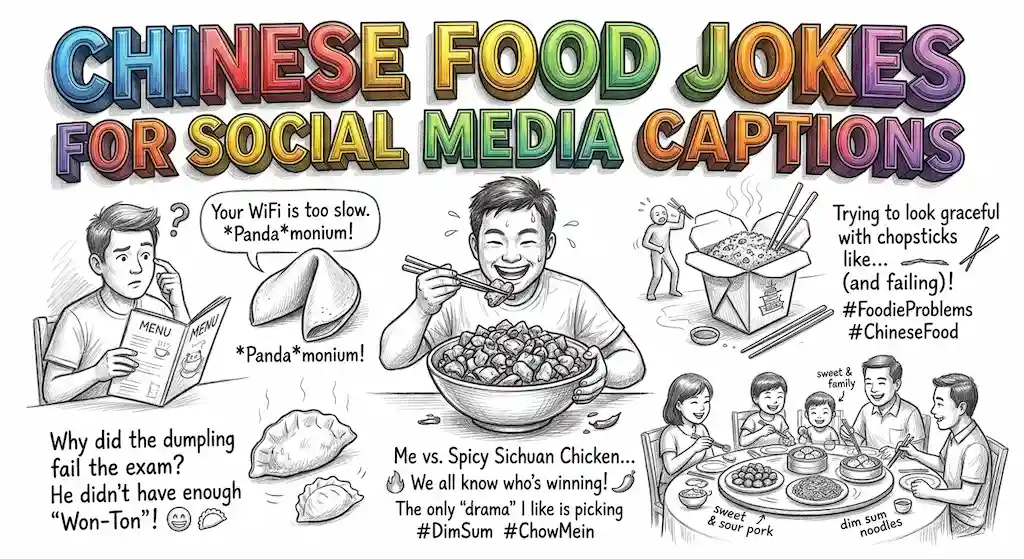
Chinese Food Jokes for Social Media Captions
A good food caption should be short enough to read quickly and clever enough to complement the photo. Use these lines for takeout pictures, dinner updates, food stories, or posts about a meal with friends.
- Wok this way to a better dinner.
- Rice to meet you, dinner.
- Just here for the dumpling details.
- Noodle around and find your happiness.
- My plans tonight are soy delicious.
- Wrapped up in a dumpling kind of mood.
- Stirring up a little dinner excitement.
- Fortune favours the hungry.
- Takeout tonight, leftovers tomorrow, happiness all week.
- I came, I saw, I ordered extra rice.
- This dinner deserves a standing ovation and a second helping.
- My favourite kind of delivery comes with chopsticks.
For more ideas beyond food humour, explore PunsEmpire’s flight jokes and weather jokes for other occasions and conversation starters.
Chinese Food Puns for Food Lovers
Food puns work best when the wordplay feels natural. A familiar expression with a small twist is often funnier than a complicated sentence that requires explanation.
Try these quick puns when chatting with friends or writing a playful message.
- Wok and roll, dinner is ready.
- You are soy wonderful.
- Let us give this meal a rice review.
- I have a dumpling good feeling about tonight.
- That noodle dish really tied the meal together.
- I am on a roll, preferably a spring roll.
- This dinner is worth every grain of effort.
- The chef really knows how to wok the talk.
- Life is better when you add a little flavour.
- I am in a committed relationchip with my chopsticks.
- Everything is going according to the rice of the occasion.
- The menu had me at hello, and the dumplings sealed the deal.
Not every pun needs to be a masterpiece. Sometimes the fun comes from a familiar phrase that has been given a delicious new meaning.
How to Make Your Own Chinese Food Jokes
Creating food jokes is easier when you start with something people recognise. You do not need complicated language or a long setup. A familiar dish, an unexpected connection, and a clear punchline can be enough.
Start with a familiar food
Choose one item, such as noodles, rice, dumplings, soy sauce, or a fortune cookie. Think about its shape, texture, preparation, or role in a meal.
For example, noodles naturally suggest tangles and twists. A dumpling can inspire jokes about wrapping, while fried rice suggests stirring things up.
Find a phrase with two meanings
Wordplay works when a word has a literal meaning and a familiar expression attached to it. Think of phrases such as “roll with the punches,” “stir things up,” or “a grain of truth.”
You might turn “roll with the punches” into a joke about a spring roll entering a boxing match. The reader recognises the expression before discovering the food related twist.
Add an unexpected ending
A joke often works because the ending takes the reader somewhere unexpected. Keep the setup short, then deliver the punchline without explaining it.
For example:
Setup: I asked my fortune cookie for advice about saving money.
Punchline: It told me to stop ordering enough takeout for a small village.
The humour comes from the contrast between the cookie’s expected wisdom and a familiar spending habit.
Keep the humour respectful
Chinese cuisine includes many regional traditions, ingredients, and cooking styles. Focus on food, cooking, menus, and dining experiences rather than stereotypes about Chinese people, accents, or cultural practices.
This approach gives your jokes a wider audience and helps keep the humour welcoming.
A Quick Guide to Choosing the Right Food Joke
Different situations call for different styles of humour. Use this simple guide to choose a joke that fits the moment.
| Situation | Best joke style | Example topic |
|---|---|---|
| Family dinner | Clean question and answer jokes | Dumplings and noodles |
| School activities | Short, easy puns | Chopsticks and rice |
| Social media captions | Brief one liners | Takeout and fortune cookies |
| Conversation with friends | Dialogue jokes | Ordering too much food |
| Food themed party | Playful wordplay | Spring rolls and soy sauce |
| Restaurant review | Light observational humour | Menus and extra servings |
If you are unsure which joke to choose, read it aloud. A good joke usually sounds natural when spoken and delivers its punchline without too much explanation.
A Note on Fortune Cookies and Chinese American Food Culture
Fortune cookies offer a useful example of why food jokes should be playful without confusing humour with history. Although many Americans associate these cookies with Chinese restaurants, historical accounts connect their development to Japanese traditions and early twentieth century America.
The Smithsonian’s historical overview discusses the role of Japanese American bakers and how fortune cookies became associated with Chinese restaurants during the twentieth century. The Library of Congress explanation of fortune cookies also describes competing accounts of their origins.
These sources are useful when a joke collection includes a factual aside. The safest approach is to distinguish a playful punchline from a historical claim, especially when food traditions cross cultures.
Conclusion About Chinese Food Jokes
Chinese food jokes turn familiar dishes into little moments of fun, whether you are sharing dumplings at dinner, choosing a takeout order, or writing a caption for your favourite meal. Noodle puns, fortune cookie punchlines, and jokes about chopsticks offer different ways to bring humour into everyday conversations.
The best joke is usually the one that fits your audience. Choose simple lines for children, quick captions for social media, and conversational jokes when friends are gathered around the table. You can also create your own punchlines by connecting a familiar food with an unexpected expression.
Keep the humour focused on food and shared experiences, and everyone has a better chance of enjoying the laugh. After all, a good dinner satisfies your appetite, while a clever food pun gives the conversation a little extra flavour.
FAQs
What are Chinese food jokes?
Chinese food jokes are lighthearted puns, one liners, and short stories inspired by dishes, ingredients, cooking, and dining experiences associated with Chinese cuisine. Common subjects include noodles, dumplings, fried rice, chopsticks, and fortune cookies. Food focused humour makes these jokes easy to share at meals, family gatherings, and casual conversations.
What are some funny Chinese food puns?
Popular examples include “Wok this way,” “You are soy wonderful,” and “Let us roll with the spring rolls.” These puns adapt familiar expressions to food related words. They work well because readers recognise the original phrase and understand the playful twist without needing a long explanation.
Are Chinese food jokes suitable for kids?
Yes, food focused jokes can be appropriate for children when they use simple language and avoid offensive stereotypes. Jokes about noodles getting tangled, dumplings being wrapped up, and chopsticks learning new skills are suitable options for family meals, classrooms, and lunchbox notes.
What are the best Chinese takeout jokes?
The most relatable takeout jokes focus on ordering too much food, sharing the last dumpling, saving leftovers, and struggling to choose from a long menu. These everyday situations give the punchline a familiar setup. Short jokes work particularly well when you want to share a laugh while waiting for dinner.
Can I use Chinese food jokes as Instagram captions?
Yes. Short food puns and one liners can complement meal photographs, restaurant visits, and takeout updates. Captions such as “Rice to meet you” or “Wok this way to a better dinner” add playful wordplay without taking attention away from the image. Choose a caption that matches the dish and your tone.
How do I write a good Chinese food joke?
Start with a familiar dish or ingredient, then look for a word or expression with a second meaning. For example, noodles can inspire jokes about tangled problems, while spring rolls connect naturally with the idea of rolling. Finish with a concise, unexpected punchline and remove any words that do not help the joke land.
What are fortune cookie jokes?
Fortune cookie jokes play on the small messages inside fortune cookies, often treating them as predictions, advice, or mysterious announcements. A punchline might contrast a grand prediction with an ordinary event, such as receiving dessert. These jokes work well because the familiar format creates an easy setup for an unexpected ending.
Why are fortune cookies associated with Chinese restaurants?
Fortune cookies became closely associated with Chinese restaurants in the United States, but their history is more complex than the popular assumption that they originated in China. The Smithsonian describes Japanese influences on the modern American fortune cookie and its later association with Chinese American restaurants. The precise origin story includes competing historical claims.
Which Chinese food jokes work best for social media?
Short puns, quick one liners, and simple food observations are useful for social media because readers can understand them quickly. Noodle wordplay, dumpling captions, and fortune cookie jokes are especially easy to adapt to food posts. Keep the wording concise and make sure the joke relates naturally to the post.
Are Chinese food jokes different from general food jokes?
Chinese food jokes focus on dishes, ingredients, and dining experiences associated with Chinese cuisine, while general food jokes can cover any food or cooking subject. Both use wordplay, surprising endings, and familiar situations. Respectful, specific humour helps make a joke relevant without relying on cultural stereotypes.
For more themed humour, you can also explore PunsEmpire’s summer jokes, snow jokes, and age jokes when you need jokes for seasonal posts, celebrations, or everyday conversations.
For additional historical context, HISTORY’s overview of fortune cookie origins discusses the competing origin stories and the cookie’s development in America.